
Consider the hummingbird for a long moment.

Ruby-Throated Hummingbird
Brian Doyle begins his essay Joyas Voladoras with this act of attention—because, indeed, the hummingbird rewards a slower kind of looking.
The phrase joyas voladoras, Spanish for “flying jewels,” is a historical nickname given to hummingbirds by early Spanish explorers. It’s a fitting name for a creature that embodies a streak of living color. But the hummingbird is not simply beautiful, though it is certainly that. It is ancient, highly specialized, fiercely energetic, and improbably well-traveled.
Hummingbirds belong to the family Trochilidae: a dazzling lineage, millions of years in the making, found only in the Americas. There are roughly 360 living species ranging from southeastern Alaska to the far southern reaches of Tierra del Fuego, bearing names as enchanting as the birds themselves: Topazes, Hermits, Mangoes, Brilliants, Coquettes, Emeralds.
According to Hummingbird Central, which tracks spring migration through reported sightings, hummingbirds have been making their way north for weeks now, following the season as it lengthens across the latitudes. Here in southeastern Ulster County, west of the Hudson River, ruby-throated hummingbirds — Archilochus colubris — arrived last week.
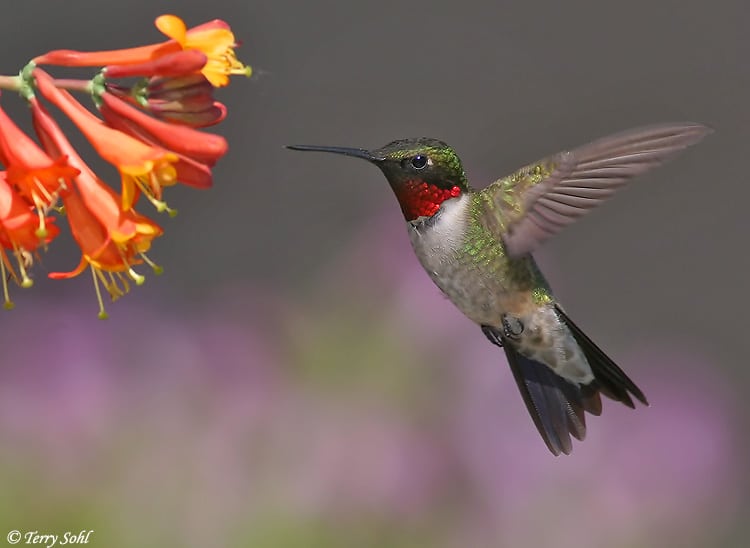
Ruby-Throated Hummingbird
The males tend to arrive first, staking claim to feeding territories before the females follow. The males also carry the namesake, the famous ruby throat, which appears nearly black until the light catches it just right, and the fiery color flashes.
The ruby-throated hummingbird winters in Central America and returns north each spring. Some individuals cross the Gulf of Mexico, while others follow coastal routes, but all arrive by way of weather, distance, hunger, and risk.
It is easy to mistake the hummingbird’s fineness for fragility, but to be delicate is not the same as to be fragile. The hummingbird is exquisite, yes, but it is also formidable, agile, and relentless. Its wings move faster than the eye can follow, and its heart beats faster than the mind can count. All of this in a body hardly heavier than a coin, no bigger than a thumb. A marvel of propulsion, it effortlessly hovers, reverses, darts, and vanishes, only to return in an instant. With one of the highest metabolic rates of any vertebrate, a hummingbird may visit hundreds, even thousands, of blooms in a single day—not for leisure, but out of necessity, driven by an insatiable hunger that demands constant fueling.
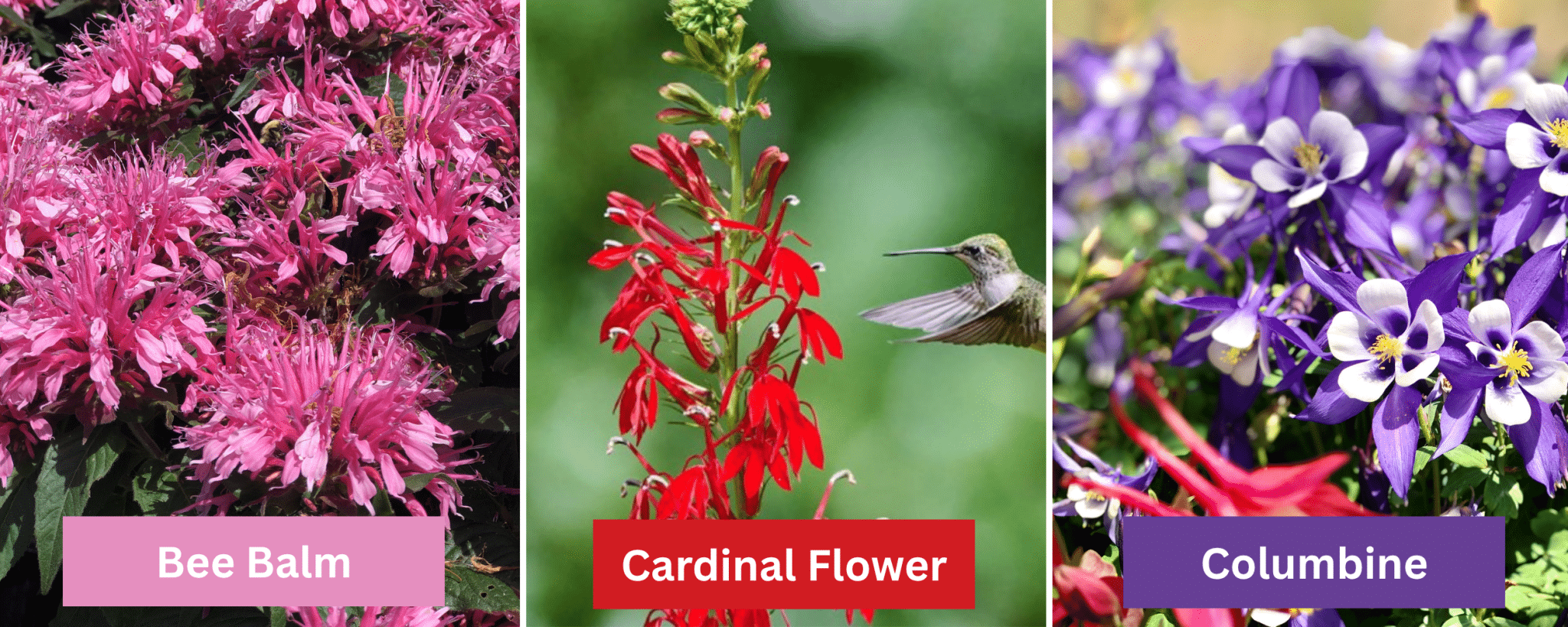
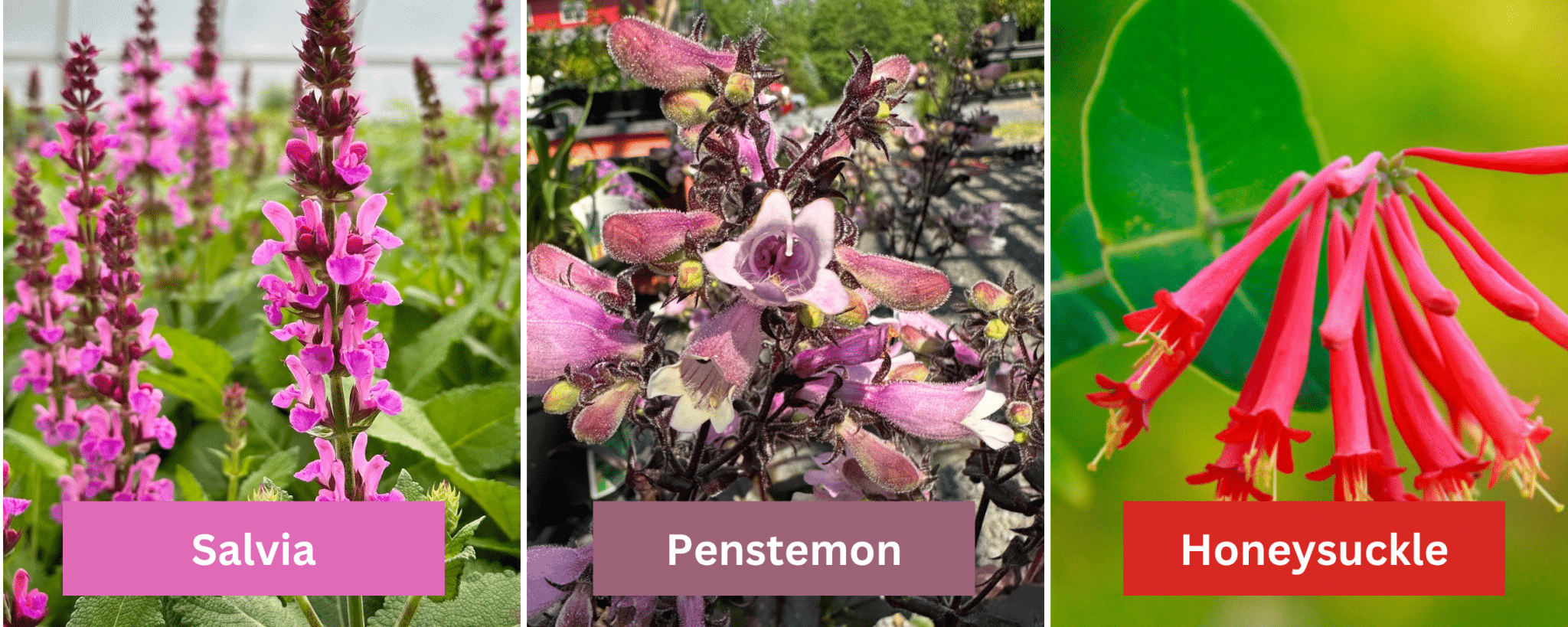
Hummingbirds and flowers are old collaborators. Across the Americas, thousands of plant species have intricately evolved alongside these remarkable birds, developing nectar-filled blooms that cater to their hovering bodies and slender bills. Many of the flowers we associate with hummingbirds—bee balm, cardinal flower, columbine, salvia, penstemon, trumpet honeysuckle—are tubular, vibrant, and rich in nectar. Their bright colors not only capture the attention of hummingbirds but also mesmerize us. Yet, color is just one facet of this relationship. Equally significant is the interplay of form and behavior: the specialized shape of the flower, the unique structure of the bird’s bill, and the hovering flight that enables the hummingbird to access nectar that other pollinators cannot reach.
In some species, this relationship is nothing short of extravagant. Take the sword-billed hummingbird, Ensifera ensifera, not a resident of our eastern gardens but a denizen of the Andes in South America, ranging from Venezuela through Colombia, Ecuador, Peru, and Bolivia. With a bill longer than its body, it seems impossible—until you witness the long-tubed blooms it can access, where nectar is hidden beyond the reach of shorter bills. In these instances, bird and flower appear to illuminate one another: the blossom reveals the purpose of the bill, while the bill unlocks the secrets of the blossom.
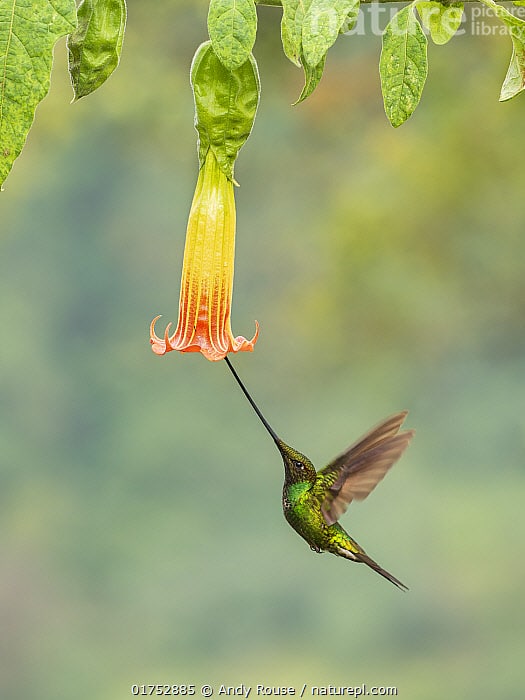
Sword-billed hummingbird (Ensifera ensifera)
This relationship extends beyond mere dependence; it’s deeply ecological. Some hummingbirds fiercely defend their favored nectar sources, returning repeatedly to specific flowers or patches of bloom. These repeated visits help shape a hidden map of pollen throughout a garden or landscape, influencing how far pollen travels, where it settles, and which flowers become interconnected through the hummingbird’s flight. In this way, the bird does not simply depend on flowers; it helps connect them.
Yet, this ancient relationship is also vulnerable. A 2022 review in Biological Reviews highlights that while only about 10% of hummingbird species are currently classified as globally threatened by the IUCN, around 60% of those with known population trends are on the decline. The greatest threats stem from habitat loss and climate change, which impact hummingbirds directly and indirectly by diminishing their vital nectar sources.
This is a broad issue, but it has a very local edge. When native vegetation is cleared, fragmented, or replaced with landscapes that lack the resources needed by birds and pollinators, hummingbirds lose essential feeding routes, resting spots, nesting habitats, and the continuous chain of blooms that supports their migration and breeding.
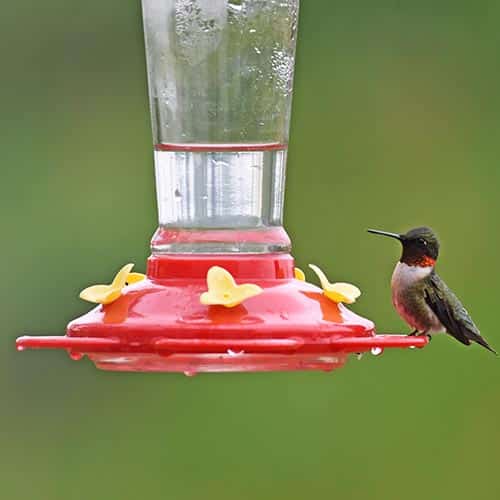 While gardeners and homeowners can’t tackle these larger pressures alone, they can create more welcoming spaces in their own backyards. Planting flowers that bloom from spring through fall, providing perches, ensuring clean water, reducing pesticide use, and maintaining feeders—if used—can all make a difference. A feeder offers nourishment, but it also requires care; keeping it clean is part of being a responsible steward of nature
So consider the hummingbird.
As long as it allows (it may not give you long). It may appear only as a spark near the bee balm, a glint at the edge of the porch, a small green insistence entering the garden and then gone again. But if you are lucky enough to see one this week, let it interrupt you. Let it be more than a blur. Let it be what Doyle called it, what early observers called it, what the name still asks us to see: a flying jewel.
Further Readings and References:
Brian Doyle, Joyas Voladoras
Hummingbird Central, 2026 Spring Hummingbird Migration Map: https://www.hummingbirdcentral.com/
Cornell Lab of Ornithology, All About Birds: Ruby-throated Hummingbird: https://www.allaboutbirds.org/guide/Ruby-throated_Hummingbird/overview
Leimberger, K. G., Dalsgaard, B., Tobias, J. A., Wolf, C., & Betts, M. G. (2022). The evolution, ecology, and conservation of hummingbirds and their interactions with flowering plants. Biological Reviews, 97(3), 923–959. https://doi.org/10.1111/brv.12828
BirdLife general hummingbird page: https://www.birdlife.org/birds/hummingbird/


